
Programs
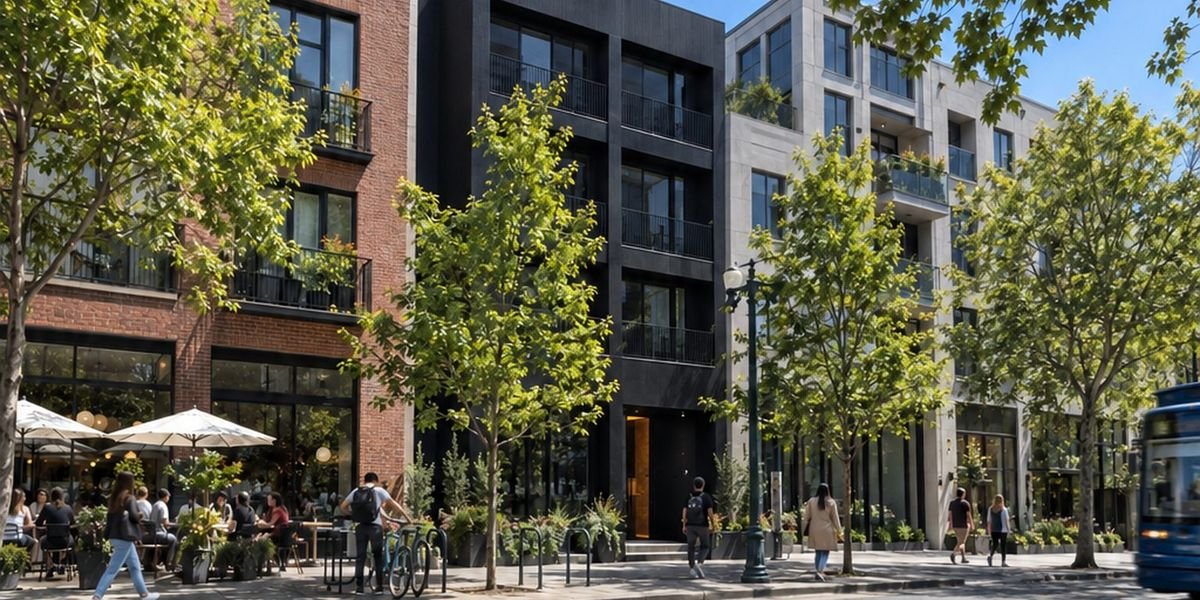
Property, held for the rent.
A storefront, clinic or workplace a neighborhood leans on, bought for less than it would cost to build, leased and performing, and held for the rent inside the Asset management line of the holding company.
- Asset management line
- Leased and performing
- Below replacement cost
- Held for rent
- A shape, not an offer

One program, inside Asset management
A storefront, clinic or workplace a neighborhood leans on, on the market for less than it would cost to build new.
A program is the shape a line takes for one scenario, and this is the shape the Asset management line takes for a building. Property is not a separate line of business: leased, performing property sits in Asset management beside outside capital run on the same rules as our own, and the holding company runs that line as Build Capital Management.
What we source is a building already leased and already performing, bought below what it would cost to build new and held for the long run rather than for a sale. What we run is the upkeep, the leasing, and, where the loan on the building has failed, the workout with the borrower in place of the foreclosure. Every building sits on the same four controls the holding company owns for every platform, underwriting, in-house audit, risk assessment and active asset management, and a building that cannot be run on all four is not acquired.
Structured, not formed, not an offer.
What we source
Leased, performing property a neighborhood leans on, bought below replacement cost and held for the long run.
What we run
Upkeep, leasing, and, where the loan has failed, the workout with the borrower rather than the foreclosure.
How it is checked
Underwriting, in-house audit, risk assessment and active asset management, the four controls every building sits on.
What has to be true before we buy
Priced before capital moves
Priced by us, against replacement cost.
The building, the lease, the tenant and the loan on it are priced by our own underwriting, against replacement cost, before any capital moves.
How the building fails
The downside first, appreciation left out.
How the building fails is underwritten before the building is priced, and the price leaves appreciation out.
Checked, not reported
The rent roll and the upkeep, checked in-house.
The rent roll and the upkeep are checked by the holding company, not reported by whoever runs the building.
Run day to day
Nothing held passively.
The upkeep and the leasing are run day to day by the holding company; nothing is held passively.
Who this program serves
On the other side of a building are its tenants, the owner selling it, and, where the loan on it has failed, its borrower.
A local business leasing the space
A landlord that does the upkeep and holds the building for the rent, not for a sale.
An owner selling below replacement cost
A buyer that prices the building as it stands, with appreciation left out.
A borrower whose loan has failed
A workout both sides can keep to, rather than the foreclosure.
No building is held today. This is the shape the program takes once one is.
Where this program sits
Asset management
The line this program belongs to.
The line this program belongs to: leased, performing property held long, plus outside capital run on the same rules as our own.
ProgramCommunities
Held and worked out, rather than shut down.
The storefronts, clinics, and workplaces a neighborhood leans on, held as performing property and, when a loan has gone bad, worked out rather than shut down.
The property program, plainly asked
Has Build Capital bought a building yet?
No. No building is held and no site is under contract. The property service is structured, not formed, and this page is the shape it takes, not a history.
Is this a separate real assets line?
No. Property sits in the Asset management line beside outside capital run on the same rules as our own, and the holding company runs both as Build Capital Management.